Skip to content


The history of

HISTORY
Founded in 1876 by Joseph Pickard and William Curry as Pickard & Curry, the company established its home at 195 Great Portland Street, London, a hub of precision, invention, and ambition. Specialising in the design and manufacture of ophthalmic instruments and components, many of which were patented, the firm quickly distinguished itself through technical excellence and forward thinking. Pioneering both sides of the optical trade, dispensing and manufacturing, it became the first to unite craftsmanship and commerce under one roof. The breadth of its creations was remarkable, setting new standards within the industry. Today, that spirit of innovation remains at the heart of the brand. A museum-worthy archive of instruments and components stands as a testament to a legacy built on ingenuity, precision, and uncompromising quality.
The instruments crafted by Pickard & Curry became essential to the rapidly expanding eyewear industry, at a time when Britain and London in particular, stood at its very centre. Their precision and reliability positioned the firm as a trusted name within a market on the cusp of transformation. In 1886, following the retirement of Mr Pickard, George Paxton Snr joined the business, marking the beginning of a new chapter. By 1920, the company formally incorporated as Curry & Paxton Ltd., a name that would go on to define a lasting legacy in British optical history.

In the 20th century, the industry underwent another state of evolution and eyewear quickly went from being a purely medicinal tool to a fashionable accessory. The company was going from strength to strength and produced, by hand, thousands of spectacles of all shapes, sizes and purposes to accommodate the growing market. It was around this time that tortoiseshell became a favourable material for its lightness, strength and depth of colour, and the company offered a variety of elegant styles for both men and women.
Many patents were registered, one of note is titled ‘Improvement in Goggles’. Accepted in June 1939, it relates to goggles that are suitable for outdoor sports such as skiing. Another outdoor sport was motoring and aviation where we produced leather/silk-trimmed goggles and glasses with protective side-shields made from either a steel mesh or perforated leather.
From Screen to Auction
DEFINING AN ERA
These products, which are thought to be over 100-years-old, thanks to the expert guidance from The College of Optometrists, proudly exist in our archive today, and have been reinterpreted for modern-day life. Suddenly, the world was then put on hold with the advent of World War Two and the company was recognised by the public and MOD for its innovative skills, and in turn, dutifully supplied many special items to the war efforts such as gas mask spectacles and plastic mouldings for aircraft parts.


2006
AN ICON, PRESERVED IN TIME
Michael Caine’s tortoiseshell optical frames worn in The Ipcress File were offered at auction at Christie’s, achieving £6,600. The sale stood as a powerful testament to the enduring cultural significance of the frame and to Curry & Paxton’s role in shaping the unmistakable silhouette of Britain’s sixties swagger.
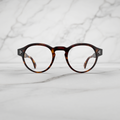
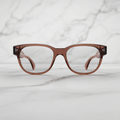
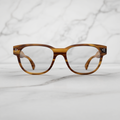
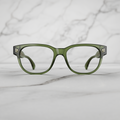
Both in and out of character, Caine wore Yvan tortoiseshell opticals from Curry & Paxton, easily distinguishable via the signature three-dot pin work on the temples. They did more than complement his handsome looks and sharp style but further cemented him as a style icon ne plus ultra. Funeral In Berlin followed in 1966 and Billion Dollar Brain the year after, however, it was in 1969 when Curry & Paxton hit its peak in the 20th century with The Italian Job. The term ‘classic’ is too liberally used these days, but if there was one adjective to describe it that would be it (even half a century later).

A Legacy Renewed
MADE IN ENGLAND
SHOP OUR COLLECTIONS
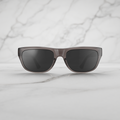
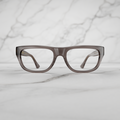
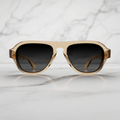
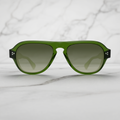
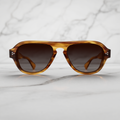
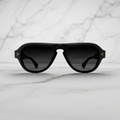
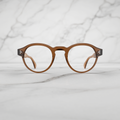
Curry & Paxton represents British eyewear at it's elegant, iconic best. Inspired by the timeless style of past patrons, here we present our Sunglasses collection